

Win the landlord. Then prove it every month.
Rent-to-rent runs on trust. Owners hand you their homes because they believe you will pay on time and look after them. We build operators a professional website that wins those owners, a portal that shows each one their statements, inspections and certificates, and the back office that runs your serviced apartments, rooms or lets behind it.


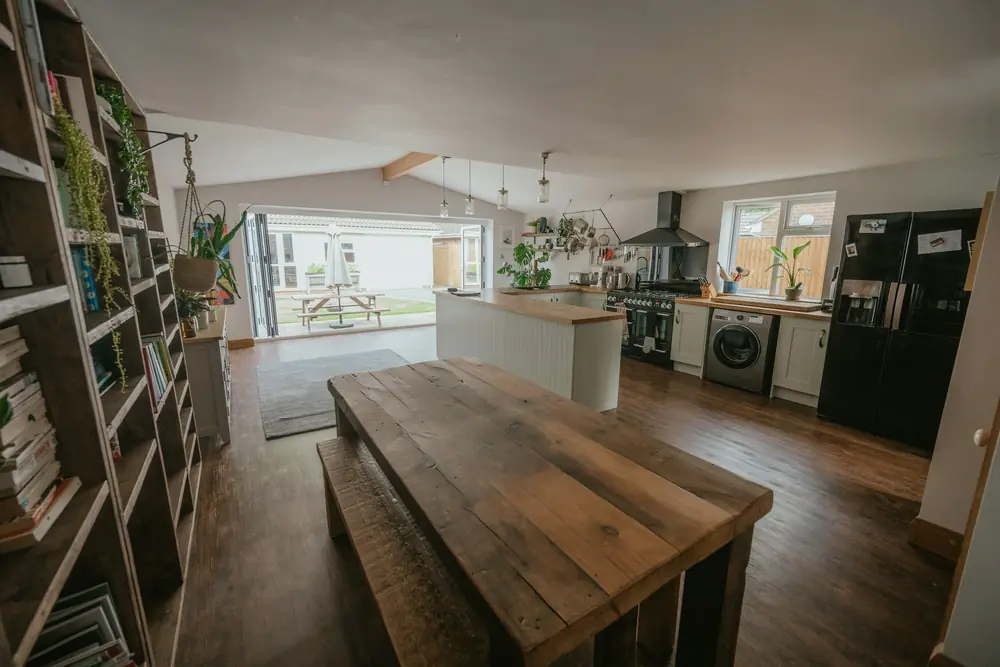
Running homes for other people is a trust business.
The operators we speak to work hard for their landlords. The difficulty is showing it: the statements, the photos and the paperwork are spread across a phone, a spreadsheet and three inboxes.
Trust kept in messages
Updates, photos and payment screenshots sent one at a time, and hard to pull together the moment an owner asks how the whole year went.
Deals judged on a guess
A guaranteed rent agreed before every cost is counted: bills, cleaning, furnishing, empty weeks and any licence the council may want.
Consent you cannot find
The owner's permission, the lender's consent, the freeholder's letter and the insurance schedule are what protect you, and they are rarely kept in one place.
Bookings, rooms and repairs by memory
Who checks in tomorrow, which room is free next month and which repair is waiting, all held in one head while the portfolio grows.
What we build for rent-to-rent.
Start with the piece that wins your next landlord, then add the rest. Everything shares one set of records, so an inspection or certificate logged once shows up in every statement it belongs to.
Know the numbers before you sign.
A deal analyser built around how you actually let: as a single let, room by room or as serviced accommodation. Your costs, your assumptions and official area data, side by side.
Guaranteed rent, bills, cleaning, furnishing, insurance, licensing and empty weeks, so the margin you see is the margin you get.
A single let, rooms and short stays modelled on the same home before you agree a rent with the owner.
Rents, sold prices and energy ratings from official sources, so your assumptions start from evidence.
Turn the deal into a branded proposal that shows the landlord what you offer and how you will look after their home.
The rules that follow you into every home.
In rent-to-rent you often become the landlord or host to the people living in the home, so many of the owner's duties sit with you. These are the rules operators ask us about most, and where software takes the strain.
Renters' Rights Act: the new tenancy system
Most private tenancies in England became assured periodic tenancies with no fixed end date, new and existing alike. Section 21 no-fault evictions ended, possession now uses section 8 grounds and Form 3A, and new tenants must get the key terms in writing.
Source: GOV.UK, Renters' Rights Act: an overview for landlords
Mandatory HMO licensing
In England, an HMO with five or more people forming two or more households needs a council licence. Licensed bedrooms must be at least 6.51 m² for one adult and 10.22 m² for two, and letting an unlicensed HMO can bring a fine of up to £40,000.
Additional and selective licensing
Councils can license smaller HMOs, or every privately rented home in an area. Since 23 December 2024 they no longer need government approval to do so, after a 10-week consultation.
London's 90-night limit
A home in Greater London can be let as short stays for up to 90 nights in a calendar year without planning permission, as long as the person providing it pays council tax on it. Beyond 90 nights, planning permission is needed.
Short-term let licences in Scotland
Every short-term let in Scotland needs a council licence, and the licence number must appear in every listing and advert. Edinburgh is a control area where turning a whole second home into a short let needs planning permission, and its 5% visitor levy began on 24 July 2026.
Source: Scottish Government, Short-term lets: regulation information
Fire safety for paying guests
The fire safety law for businesses applies as soon as you charge someone to stay in a home that is not theirs, even for one night. In England, the official guide for small paying guest accommodation explains what is expected, and fire risk assessments must be recorded in full.
Source: GOV.UK, Making your small paying guest accommodation safe from fire
Gas every year, electrics every five
A Gas Safe registered engineer must check gas appliances every 12 months, with the record to tenants within 28 days. Electrical installations must be inspected at least every five years, with reports to tenants within 28 days and fines of up to £40,000.
Source: legislation.gov.uk, Electrical Safety Standards Regulations 2020, reg 3
Bigger fines and wider rent repayment orders
Councils can fine up to £7,000 for a first breach and up to £40,000 for serious or repeat ones, including unlicensed HMOs. Rent repayment orders now reach two years' rent and can be made against superior landlords, such as the owner at the top of a rent-to-rent chain.
Private Rented Sector Database
Landlords will register themselves and every let home, with gas, electrical and energy certificate evidence. Regions are planned to open in turn, from the West Midlands on 15 December 2026, with London from 15 July to 14 October 2027. The regulations still need Parliament's approval, and the government's planned fee is £65 per property per year. The landlord starts each registration, and an appointed letting agent can supply the property details.
A summary to show where software helps, not legal advice. Dates and figures checked against the sources shown on 23 October 2026.
From first viewing to monthly statement.
Follow one home from the day an owner enquires to the statement they read every month.
Owners enquire through your landlord pages, and each lead is logged with the home's details and your notes.
Costs, rent and the way you will let it, checked against area data before you make an offer.
The agreement, the owner's permission and any lender, freeholder or insurer consent stored against the home.
Certificates, licences, furnishing and photos ready, and the home live on your site.
Bookings, rooms or tenants, cleaning and repairs handled from one place.
A monthly statement with rent paid, inspections and paperwork, in the owner's own login.
Property work that is live today.
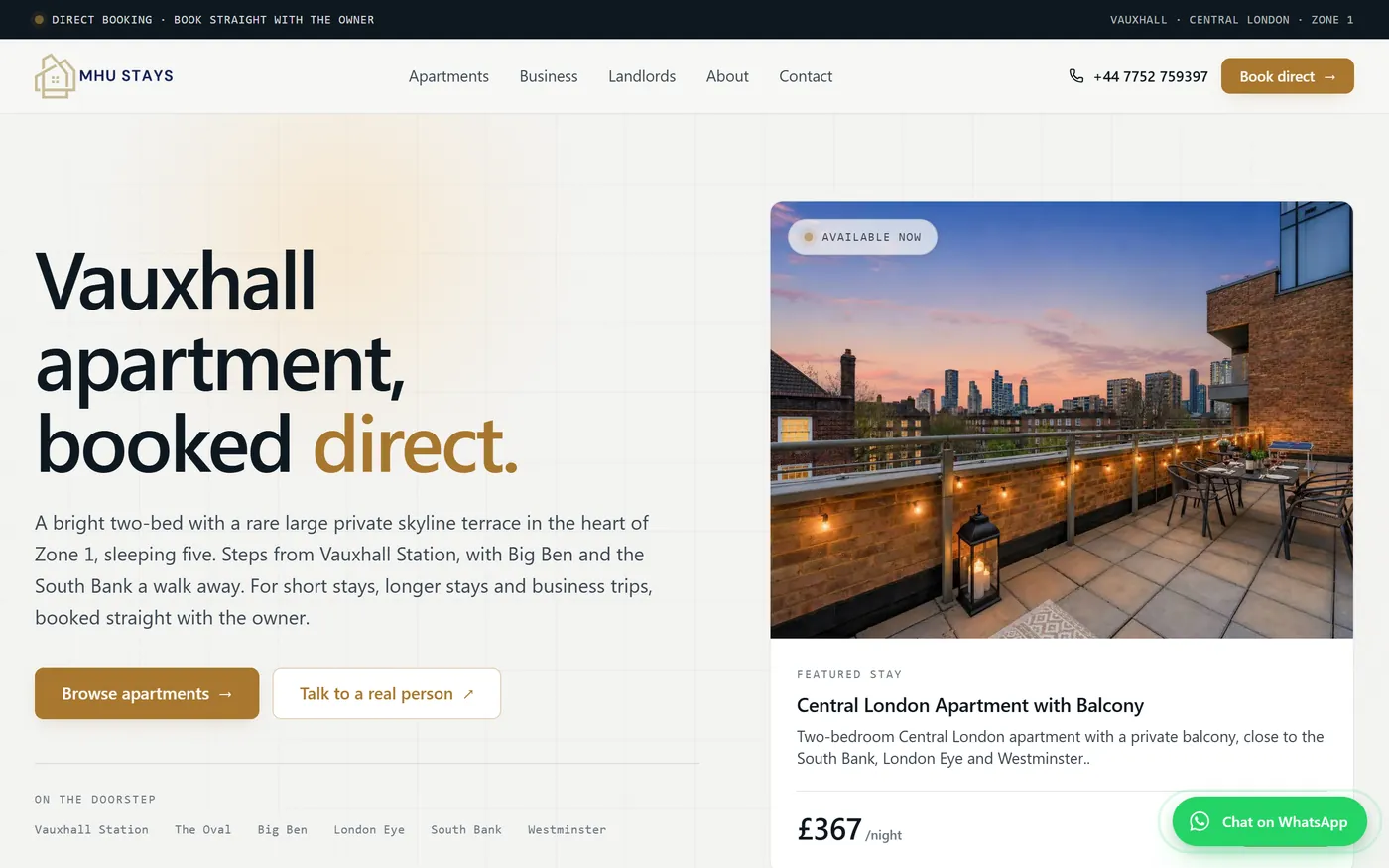
Real websites and systems in use by UK property businesses.

Questions rent-to-rent operators ask us.
Anything else, ask us on the call.
Can you build a website that wins landlords, not just guests?
Can landlords see their own statements?
Do you hold rent or pay landlords for us?
Will the deal analyser tell me whether a deal is good?
What consent should be on file before I take on a home?
Does a home I let as rooms need an HMO licence?
Why are landlords asking more questions about licensing?
Can it handle serviced accommodation, rooms and single lets together?
I am starting out with one or two homes. Is this for me?
Keep reading
Tell us how you work today.
A short call, your screen and ours. We listen to how your week runs, show you what we would build, and give you a fixed price in writing.
- Built around your process, not a template
- Hosted, looked after and improved by us
- One UK studio from first call to launch
Prefer email? semir@bozmaps.com