

Lettings software shaped around your branch.
Your team juggles landlords, applicants, contractors and a rulebook that changed on 1 May 2026. We build letting agents one system for the whole lettings journey, from the advert to move-out, with compliance and landlord updates built in rather than bolted on.

Good agents carry a lot of plates.
The agents we speak to know their landlords, their tenants and their patch. What slows them down is the number of places the work lives, and how much of it has to be chased by hand.
Applicants everywhere
Enquiries from the portals, your website, phone calls and walk-ins, each needing a reply, a viewing and a record of what was said.
Landlords chasing updates
Owners want to know about rent, repairs and certificates, and every answer means searching the system, the inbox and the shared drive.
Compliance at scale
Gas, electrical, energy, alarms, deposits and licences for every managed home, with the agency's name on the line if one slips.
A new way to let
Advertised rents, no bidding, one month's rent in advance, periodic tenancies and new notices. Processes and templates all needed rethinking.
What we build for letting agents.
Take the pieces your branch needs. They share one set of records, so a property, a landlord or a certificate is entered once and shows up everywhere it matters.
Every managed home, one board.
Certificates, licences and deposits for every home you manage, worked out against today's date and shared with the landlords who own them.
Owners get reminders and can upload their own certificates, so your team stops chasing by email.
Engineers send certificates through a simple link, filed against the right home with no retyping.
Certificates sent to tenants and deposit protection recorded for each let, with the dates kept.
Gas, electrical and energy evidence held and dated for every home, ready as registration opens region by region.
The rules you are letting under now.
The Renters' Rights Act changed how homes are advertised, agreed and ended in England, and agents carry much of the paperwork. Here is what matters for a lettings team, and where software takes the strain.
Renters' Rights Act: the new tenancy system
Most private tenancies in England became assured periodic tenancies with no fixed end date, new and existing alike. Section 21 no-fault evictions ended, possession now uses section 8 grounds and Form 3A, and new tenants must get the key terms in writing.
Source: GOV.UK, Renters' Rights Act: an overview for landlords
One advertised rent, no bidding
Every written advert must show a single rent, and landlords and agents cannot invite or accept offers above it. No rent can be taken before signing, and usually no more than one month's rent between signing and moving in.
No blanket bans on children or benefits
Landlords and agents cannot refuse, discourage or block viewings for people because they have children or receive benefits, with fines of up to £7,000. Affordability checks and referencing are still allowed. Wales and Scotland have their own versions of the ban.
Source: GOV.UK, Rental discrimination under the Renters' Rights Act 2025
Rent increases once a year, on Form 4A
Rent can rise only once a year, and not in the first year, using Form 4A with at least two months' notice. Tenants can ask the First-tier Tribunal to decide, and rent review clauses no longer work.
Tenant Fees Act caps
Holding deposits are capped at one week's rent, and tenancy deposits at five weeks' rent where the annual rent is under £50,000 (six weeks at £50,000 or more). Most other fees to tenants are banned.
Source: GOV.UK, Tenant Fees Act 2019: statutory guidance (amended 1 May 2026)
Redress and client money protection for agents
Anyone doing lettings or property management work for landlords in England must belong to a government-approved redress scheme, and agents who hold clients' money must be in a client money protection scheme. Estate agents dealing in homes must belong to a redress scheme too.
Source: GOV.UK, Protecting clients' money if you're a property agent
Anti-money laundering checks for agents
Estate agency businesses, including property finders, must register with HMRC for money laundering supervision before trading and check buyers and sellers. Letting agents are covered for homes let at £10,000 a month or more, a threshold that changed from euros to pounds on 30 June 2026.
Source: legislation.gov.uk, Money Laundering Regulations 2017, reg 13
Private Rented Sector Database
Landlords will register themselves and every let home, with gas, electrical and energy certificate evidence. Regions are planned to open in turn, from the West Midlands on 15 December 2026, with London from 15 July to 14 October 2027. The regulations still need Parliament's approval, and the government's planned fee is £65 per property per year. The landlord starts each registration, and an appointed letting agent can supply the property details.
Material information in listings
Adverts must not leave out information buyers or tenants need to decide, such as price, tenure, council tax and known risks. The old Trading Standards guidance was withdrawn in 2025 after the DMCC Act took over, and the government has promised new guidance for sales listings.
Source: GOV.UK, Material information in property listings consultation
A summary to show where software helps, not legal advice. Dates and figures checked against the sources shown on 23 October 2026.
From the advert to move-out.
Follow one let through your branch. Each step leaves a record your team, the landlord and the tenant can rely on.
The rent stated in every advert, on your site and the portals, with enquiries landing in one place.
Applicants qualified, viewings booked online and feedback recorded for the landlord.
Offers recorded at the advertised rent, holding deposit within the cap, referencing and Right to Rent tracked.
Written terms, certificates and deposit details sent and logged before the keys change hands.
Rent, repairs, inspections and certificate renewals handled on schedule, with the landlord kept informed.
Rent reviews by formal notice once a year, and notices and move-outs recorded properly.
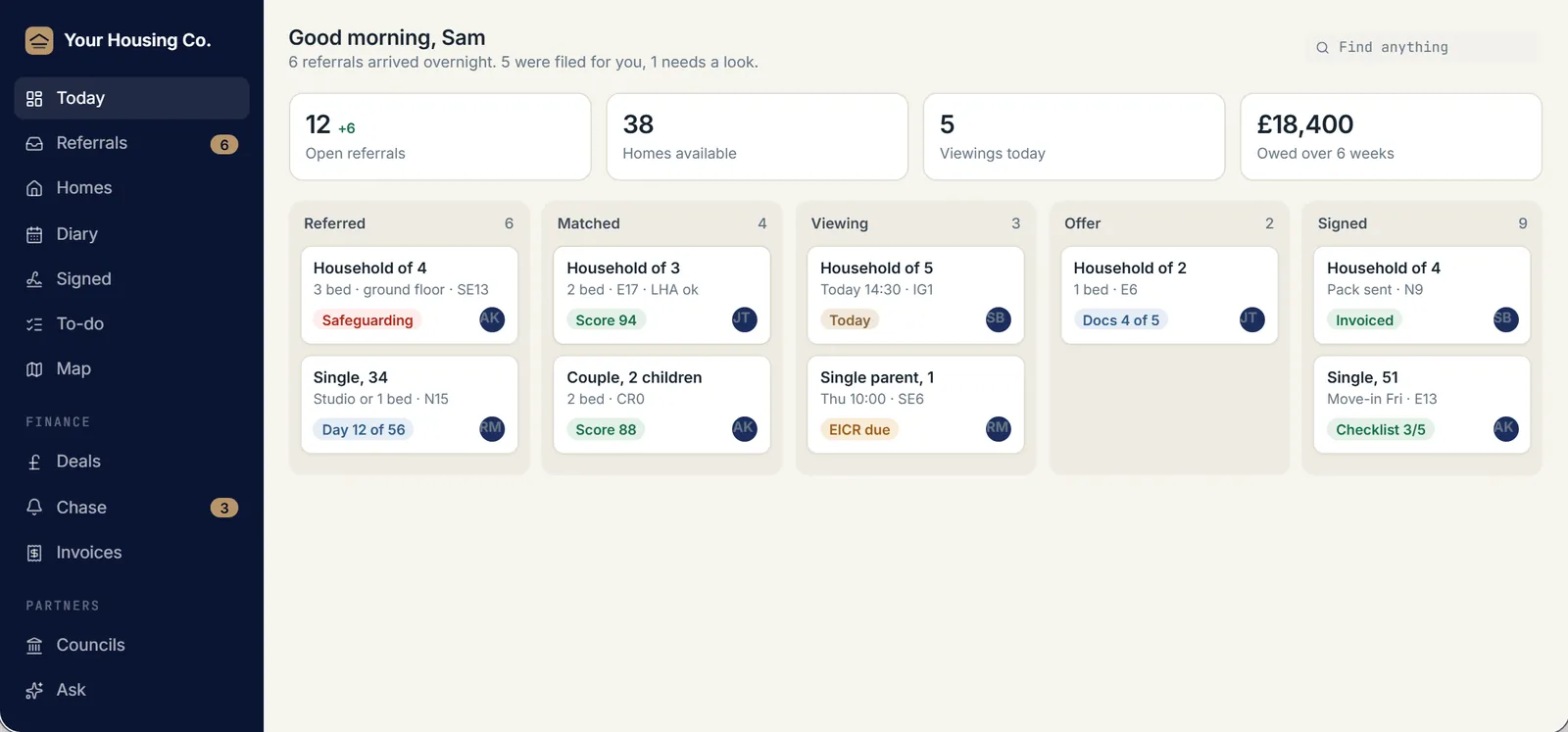
Property work that is live today.
Real websites and systems in use by UK property businesses.

Questions letting agents ask us.
Anything else, ask us on the call.
Can it work alongside our existing CRM?
Can landlords see their own statements and certificates?
How does it handle the ban on rental bidding?
Will it work out holding deposits and deposit caps?
Can our team do inventories and inspections on their phones?
Do you hold client money or rent?
Can it help our landlords get ready for the PRS Database?
We have more than one branch. Does that work?
Keep reading
Tell us how you work today.
A short call, your screen and ours. We listen to how your week runs, show you what we would build, and give you a fixed price in writing.
- Built around your process, not a template
- Hosted, looked after and improved by us
- One UK studio from first call to launch
Prefer email? semir@bozmaps.com