

Every branch, every brand, one platform.
Growth brings new branches, new brands and new systems, and soon nobody can see the whole business in one place. We build agency groups a single platform underneath their brands, with the data joined up, leads sent to the right branch and the numbers directors need without a weekly spreadsheet.
Growth is good. The joins start to show.
Groups grow by opening offices, buying agencies and launching brands, and each step usually brings its own way of working. None of that is wrong, but it gets harder to run the group as one business.
Processes that drift
Every office has its own templates, checklists and habits, so standards and compliance vary by branch and are hard to check from the top.
Data in silos
Lettings in one system, sales in another, the website somewhere else and finance in spreadsheets. Joining them up for a board meeting is a job in itself.
Leads lost between offices
Valuation requests and enquiries land in a shared inbox, and the right branch hears about them late, or not at all.
Systems you have outgrown
Software that cannot be changed to fit how the group works, and data that is hard to get back out when you want to move it.
What we build for agency groups.
One platform with room for every brand. Start with the piece that hurts most and add the rest as the group is ready.
One platform, many front doors.
Each brand keeps its own website, voice and look. Underneath, listings, applicants and enquiries live in one place, so someone who contacts one office is known to the next.
Separate sites, logos and colours for each brand, managed from one dashboard.
Enquiries routed by postcode, property or branch, with a record of who picked them up and when.
A buyer or tenant registered with one office can be matched to homes across the group, where your privacy notices allow it.
Area and branch pages built from your own data, so every office has a strong local presence online.



Compliance that holds across every office.
The rules do not change from branch to branch, so your processes should not either. These are the duties software helps a group apply the same way everywhere.
Renters' Rights Act: the new tenancy system
Most private tenancies in England became assured periodic tenancies with no fixed end date, new and existing alike. Section 21 no-fault evictions ended, possession now uses section 8 grounds and Form 3A, and new tenants must get the key terms in writing.
Source: GOV.UK, Renters' Rights Act: an overview for landlords
One advertised rent, no bidding
Every written advert must show a single rent, and landlords and agents cannot invite or accept offers above it. No rent can be taken before signing, and usually no more than one month's rent between signing and moving in.
Redress and client money protection for agents
Anyone doing lettings or property management work for landlords in England must belong to a government-approved redress scheme, and agents who hold clients' money must be in a client money protection scheme. Estate agents dealing in homes must belong to a redress scheme too.
Source: GOV.UK, Protecting clients' money if you're a property agent
Anti-money laundering checks for agents
Estate agency businesses, including property finders, must register with HMRC for money laundering supervision before trading and check buyers and sellers. Letting agents are covered for homes let at £10,000 a month or more, a threshold that changed from euros to pounds on 30 June 2026.
Source: legislation.gov.uk, Money Laundering Regulations 2017, reg 13
Material information in listings
Adverts must not leave out information buyers or tenants need to decide, such as price, tenure, council tax and known risks. The old Trading Standards guidance was withdrawn in 2025 after the DMCC Act took over, and the government has promised new guidance for sales listings.
Source: GOV.UK, Material information in property listings consultation
Consumer law with teeth: full prices, real reviews
Under the Digital Markets, Competition and Consumers Act, adverts must show the total price including fees the customer cannot avoid, such as routine cleaning fees, and fake or concealed incentivised reviews are banned. The CMA can now fine firms directly, up to 10% of global turnover.
Private Rented Sector Database
Landlords will register themselves and every let home, with gas, electrical and energy certificate evidence. Regions are planned to open in turn, from the West Midlands on 15 December 2026, with London from 15 July to 14 October 2027. The regulations still need Parliament's approval, and the government's planned fee is £65 per property per year. The landlord starts each registration, and an appointed letting agent can supply the property details.
Data protection complaints
Organisations must give people a clear way to complain about how their data is used, acknowledge complaints within 30 days and tell them the outcome.
Source: ICO, New data protection complaints law now in force
A summary to show where software helps, not legal advice. Dates and figures checked against the sources shown on 23 October 2026.
From many systems to one platform.
Moving a group is a project in its own right. This is how we do it without stopping the business.
Branches, brands, systems and the way each office really works, written down and agreed.
One set of records and roles, with the room each brand and branch needs to work its own way.
Properties, clients, documents and history brought across from your current systems and checked with you.
Offices move over in stages, so the rest of the group keeps trading as normal.
Group dashboards for directors, and changes made as the business asks for them.
Property work that is live today.
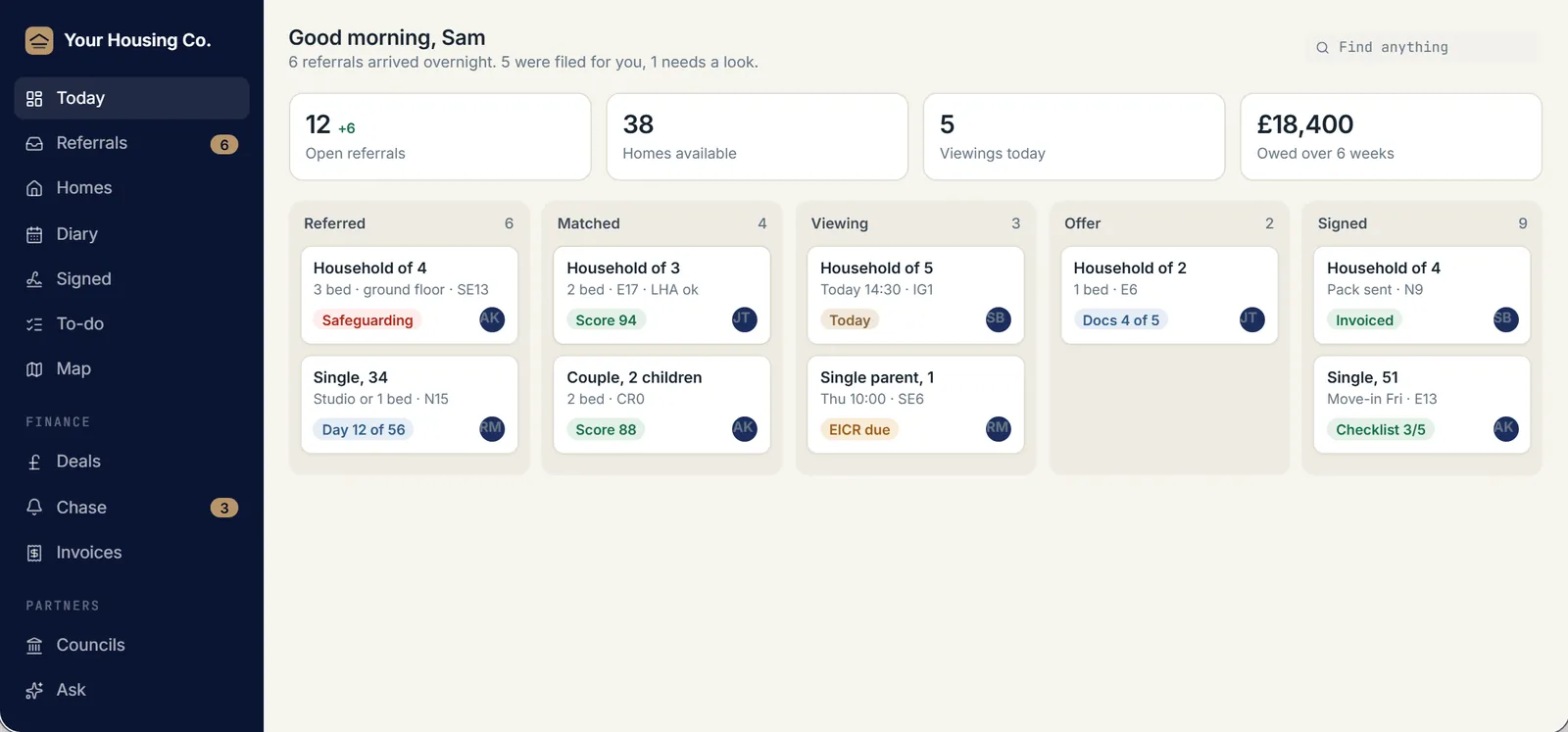
Real websites and systems in use by UK property businesses.

Questions agency groups ask us.
Anything else, ask us on the call.
Can each brand keep its own website and identity?
Can you move us off our current systems?
How do leads get to the right branch?
Can directors see group-wide figures?
How is data kept separate between brands or franchisees?
We are building a property-tech product. Do you work with founders?
Do you hold client money?
Keep reading
Tell us how you work today.
A short call, your screen and ours. We listen to how your week runs, show you what we would build, and give you a fixed price in writing.
- Built around your process, not a template
- Hosted, looked after and improved by us
- One UK studio from first call to launch
Prefer email? semir@bozmaps.com