
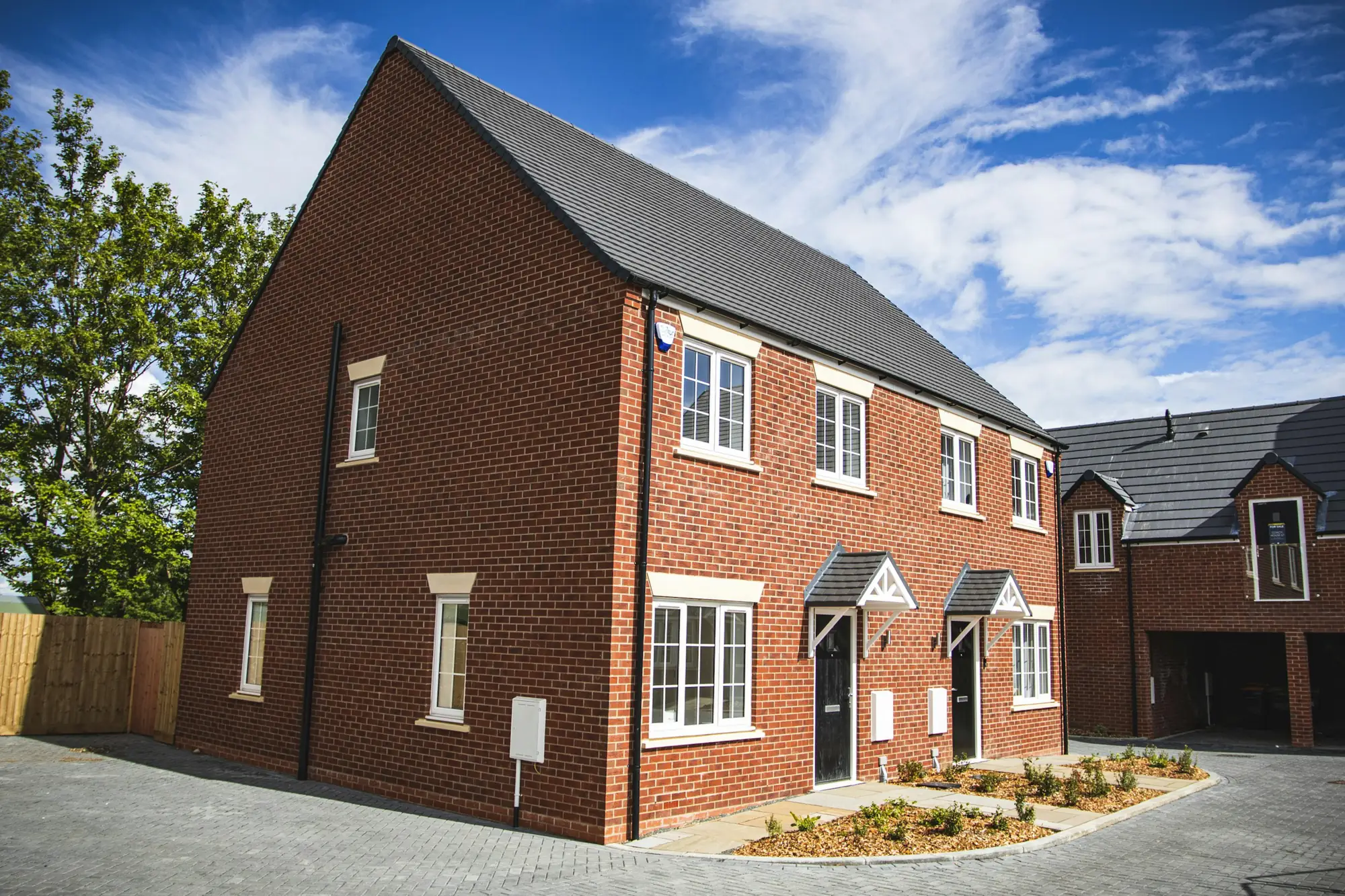
Sell the scheme before the scaffolding comes down.
Buyers make up their minds on a website long before they stand in a show home. We build developers sites with live plot availability, show home bookings and buyer updates, plus maps and 3D views that make a scheme easy to understand.
Building homes is hard enough. Selling them should not be.
Most developers we talk to have the hard part handled: the land, the build, the quality. What slows them down is the information around it, scattered across PDFs, inboxes and different tools.
Availability that is out of date
A price list sent as a PDF is wrong the day a plot is reserved, so buyers ring to ask what is left and your sales team repeats the same answers.
Interest that goes cold
Registrations from a launch arrive through forms, agents and phone calls, and without one list nobody follows them up in the order they came in.
Buyers waiting for news
Between reservation and completion, buyers want progress, dates and photos. Without one place to find them, every question lands on your sales team.
Sites judged on scattered data
Planning history, flood risk, transport and local prices sit in different places, so comparing one site with another means gathering it all again each time.
What we build for developers.
From the first look at a site to the last aftercare request, on one set of records, so the website, the sales team and the site team always agree.
Find the right site, faster.
BozApps grew out of Bozmaps, a UK mapping studio. We build site-finding and area maps on official data, so a site's planning context, its risks and the local market sit together on one screen.
Designations such as conservation areas and listed buildings from official open planning data, plus local planning history where councils publish it.
Flood risk and other constraints shown against the site boundary, so they are seen before money is spent.
Sold prices from HM Land Registry and rents from the Office for National Statistics, to test the numbers behind a scheme.
Your sites, options and appraisals drawn on the same map and shared with partners and funders by link.
The rules shaping new homes.
Building and selling new homes in England comes with standards, levies and buyer protections that keep changing. A few of the ones the software helps you keep track of.
The Future Homes Standard
New energy and carbon standards for new homes in England apply from 24 March 2027, with a new requirement for on-site renewable electricity. Schemes already under way can keep the old rules if work starts before 24 March 2028.
Source: GOV.UK, The Future Homes and Buildings Standards: Building Circular 01/2026
Building Safety Levy
A levy now applies to new residential schemes in England of at least 10 homes or 30 student bedspaces, where building control applications were made from 1 October 2026. Rates are set per square metre by local authority area.
Source: legislation.gov.uk, Building Safety Levy (England) Regulations 2025
New Homes Quality Code and Ombudsman
Developers can choose to join the New Homes Quality Code, whose version 2 applies to homes reserved from 2 March 2026, and buyers can then use the New Homes Ombudsman Service. A statutory ombudsman is on the statute book but not yet in force.
Source: New Homes Quality Board
Biodiversity net gain
Most new developments in England must deliver at least 10% biodiversity net gain, from February 2024 for major sites and April 2024 for small ones. Since 6 August 2026, sites of 0.2 hectares or less are exempt.
Material information in listings
Adverts must not leave out information buyers or tenants need to decide, such as price, tenure, council tax and known risks. The old Trading Standards guidance was withdrawn in 2025 after the DMCC Act took over, and the government has promised new guidance for sales listings.
Source: GOV.UK, Material information in property listings consultation
Consumer law with teeth: full prices, real reviews
Under the Digital Markets, Competition and Consumers Act, adverts must show the total price including fees the customer cannot avoid, such as routine cleaning fees, and fake or concealed incentivised reviews are banned. The CMA can now fine firms directly, up to 10% of global turnover.
Higher-risk buildings and the golden thread
Buildings of at least 18 metres or 7 storeys with two or more homes must be registered with the Building Safety Regulator before anyone moves in. Accountable persons must manage safety risks and keep the golden thread of building information.
A summary to show where software helps, not legal advice. Dates and figures checked against the sources shown on 23 October 2026.
From a site to a home, in one record.
Follow a scheme from the first look at a site to the end of aftercare. Each stage builds on the last, so nothing is typed in twice.
Planning, risk and market data for the area on one map, with your notes and appraisals beside it.
A development website and registrations of interest, ready before the first plot is released.
Live availability by plot, show home viewings booked online and reservations recorded.
Build progress, photos and key dates shared in a buyer portal, not by phone.
Snagging recorded room by room with photos, and keys handed over with every document in one place.
Aftercare requests logged, assigned and closed, with a history for every plot.
Questions developers ask us.
Anything else, ask us on the call.
Can the website show live plot availability?
Can buyers reserve or pay online?
Do you make 3D models and digital twins?
Where does the site-finding data come from?
Can buyers get updates after they reserve?
Can our site teams record snagging on a phone?
We sell through estate agents. Does that still work?
Can it help with reporting to funders and partners?
Keep reading
Tell us how you work today.
A short call, your screen and ours. We listen to how your week runs, show you what we would build, and give you a fixed price in writing.
- Built around your process, not a template
- Hosted, looked after and improved by us
- One UK studio from first call to launch
Prefer email? semir@bozmaps.com